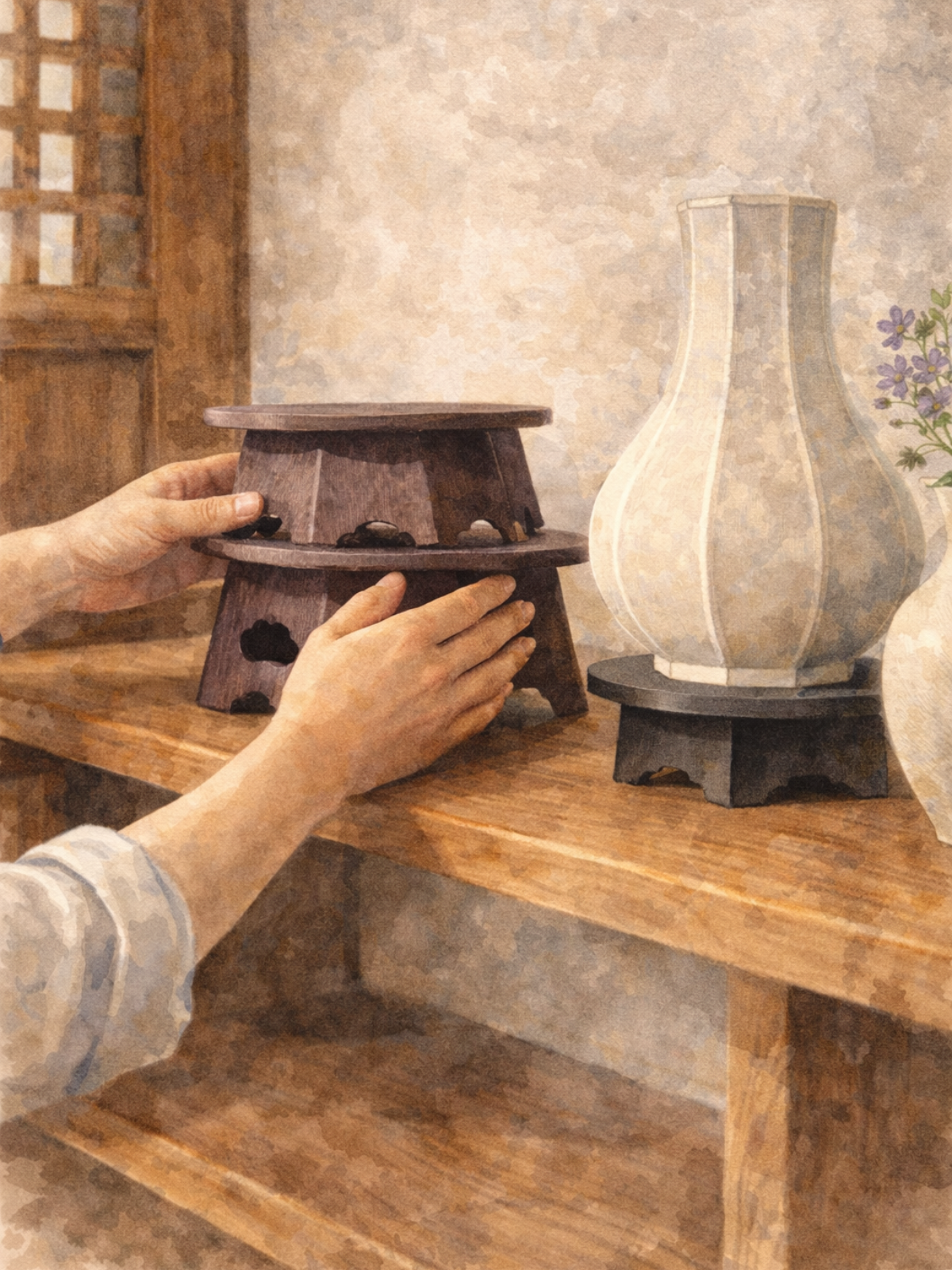
I am a resident of Bukchon Hanok Village. This year marks my ninth year living in a hanok.
I fell for the courtyard and the quiet atmosphere of the hanok, and that is why I moved here. Slowly, I fell in love with the place. On rainy days I sat on the toenmaru, the small wooden veranda, and listened to the rain. On snowy days I made little snowmen and set them here and there along the alley, and neighbors would smile at them and stop to say hello. I loved how warmly this neighborhood looks after one another.
I first met hanji while working as a dietitian at LG, in a craft class I started as a hobby. I loved the hours spent watching thin, soft paper become an everyday object and a piece of craft in my hands, and those hours with hanji have now grown to nearly eighteen years. My jobs changed many times, but my hobby and my taste stayed the same. Through paper-cut craft (jeonji gongye) and hanji painting, hanji was my rest before it ever became my work.
Living in Bukchon, I saw so many travelers walking these alleys. I would watch them take a photo and move on, and I began to hope they could feel this neighborhood’s traditions not only with their eyes, but with their hands. That hope grew, little by little, into a studio.
In January 2026, I opened Bukchon Hanji Studio. It sits inside the very hanok where I used to live. The wooden floor and courtyard I crossed every day have become a workspace where guests are welcome.
Now I spend my days with visitors from Korea and around the world, working with hanji together. Meeting Jeotso, the studio’s mascot cat who wanders into class and settles in, is one of the small joys of this place.
Someone who lived in Bukchon now teaches hanji in Bukchon.
I hope the stories of this alley stay in your hands for a long time, like a single sheet of paper.